
This [hospital] ward had a tradition that no patient would be sent off to surgery without his fellows gathering at his bedside to hold a wake. The commissioned medical staff forbid this custom as insulting to them and contrary to good medical practice. However virtually everyone in the ward was a combat infantryman and the wakes went on anyway after the nurses had left. At these wakes, ambulatory patients would gather around the bed of the fellow due to go under the knife, discuss his character, and regale him with awful stories of ineptitude in military operating rooms (wrong organs tinkered with, arm removed instead of leg, and so forth). They would also establish “dibs” on his various possessions in the event he didn’t come back alive and compose a letter to his family describing his sins and shortcomings. The only nurse who didn’t consider this tradition barbarous was an old-timer captain. She thought it an antidote against self-pity–the worst danger in any ward full of badly damaged young males.
Tony Hillerman, Seldom Disappointed, pp. 140 – 141
Tag: history
Quote: The Invincible Ignorance of the Young
As a matter of fact, I can dredge up nothing much to complain about in my formative period. We children spent those years of the Great American Depression/Great Oklahoma Dust Bowl living miles below the current poverty level but happily protected by love and the invincible ignorance of the young. Life in Sacred Heart then (and now, for that matter) was not complicated by any possibility of getting rich. Everybody was poor and when you’re a kid you don’t know you’re deprived unless you see someone who isn’t. That didn’t happen around Sacred Heart.
Tony Hillerman, Seldom Disappointed, p. 10
Lunes Latin: The Gauls are Metal
… oppida sua omnia, numero ad duodecim, vicos ad quadringentos, reliqua privata aedificia incendunt; frumentum omne, praeter quod secum portaturi erant, comburunt …
“All their towns, in number about twelve, and their villages, about four hundred, and the remaining private buildings, they burned. All their grain, except what was meant to be carried with them, they burned …”
… ut domum reditionis spe sublata paratiores ad omnia pericula subenda essent …
“… that they might be ready to undergo all dangers after destroying the hope of returning home.”
Yikes!
Taken from The Gallic Wars, trans. Franz Ruedele, pp. 12 – 13
Lunes Latin: Perfacile Esse
(I’m calling this feature “Lunes Latin” because “Monday Latin” doesn’t alliterate. Work with me here.)
The Latin phrase of the week is perfacile esse: “It would be most easy.”
… perfacile esse, cum virtute omnibus praestarent, totius Galliae imperio potiri.
“[Oregetorix persuaded the Helvetii that] it would be very easy, since they excelled in all valor, to acquire command of the whole of Gaul.”
from The Gallic Wars, by Julius Caesar, the Latin and English side-by-side editon, by Franz Ruedle, 2018.
Becoming, and then Being, Elisabeth Elliot: a review
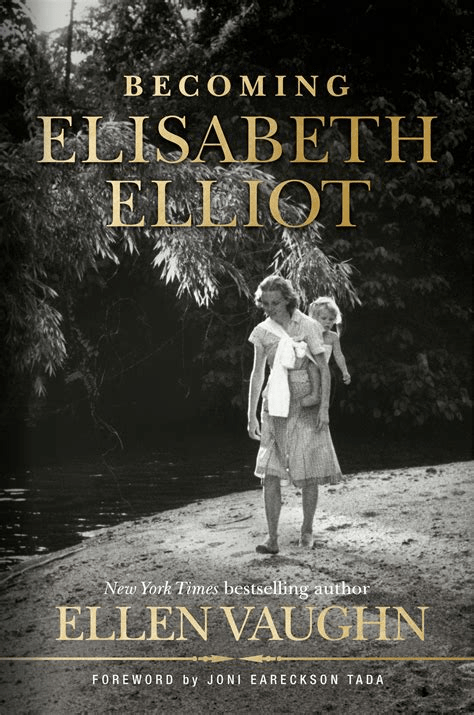
Quick! Who do we know who’s a linguist, a former missionary, a gifted writer, and wants to capture in novel form the human condition and God’s grace to us in it?
Who is awkward, reserved, and can come off as rude and abrupt, but actually has passionate emotions, a deep love for others, and a rich inner life?
Who loves nature? Crosses cultures happily, but doesn’t fit in so well in the American evangelical context? Who has a secret desire to be admired, but also suffers from poor judgement about the opposite sex?
Why, Elisabeth Elliot, of course!
Me and Elisabeth Elliot
When I was college and just discovering the things I ranted about last Friday, like the fact that we as a culture could use some guidelines about the how the sexes ought to relate to each other, I came across Elisabeth Elliot’s book Passion and Purity. I devoured it.

This book was exactly suited for me at the time. I was just starting to grow in Christ. I really wanted to do God’s will. I also, unbeknownst to me, had a lot in the common with the author of Passion and Purity: socially awkward, ascetic tendencies, perfectionistic, a longing for old-fashioned values. This book is basically about the lessons Betty, as she was called at that time, learned during her five years (!) of waiting for Jim Elliot to make up his mind that God had given him the go-ahead to marry her. Their courtship story strikes many Christian young people as really spiritual upon first hearing, and then on a second look, it starts to look as if he didn’t treat her very well possibly. But I bought into it fully.
Anyway. Full of missionary zeal to win other young people over to the idea of an extremely awkward, chaste, long courtship, I gave this book to a friend. She read it, and her reaction was, “There are the Elisabeth Elliots of this world, but I am not one of them.”
That annoyed me at the time (someone had rejected my idealistic ideal!), but from my perspective now, that friend of mine didn’t know how right she was. In fact, not even Elisabeth Elliot herself was one of the Elisabeth Elliots of the world, at least not in the sense of having perfect wisdom and self-control. At the time she was writing this (early 1980s), Elisabeth was enduring an extremely controlling marriage with a man she married because she didn’t want to be lonely. She stayed with him for the rest of her life, despite an intervention by her family. It’s chilling to realize that the woman who wrote Passion and Purity could make such a foolish decision.
Before Passion and Purity, I remember as kid seeing black-and-white photos of Elisabeth toting her small daughter Valerie into the jungle to serve the Waorani people (then called the Auca), a few years after her husband Jim was killed by them. These were the photos taken by Hungarian photographer Cornell Capa. They, and the books Elisabeth wrote about the Waorani, had made her and her martyred husband Jim famous throughout the evangelical world.
Both greater and lesser than I thought
When you think you know a story, you expect it to be boring. I put off for some time reading this duology by Ellen Vaughn, until it finally floated to the top of my reading list. Once I opened the books, I found that I couldn’t put them down. Vaughn is an excellent researcher and a vivid and sympathetic writer, and though I had read a number of books by and about the Elliots, I certainly didn’t know as much of their story as I thought.
Vaughn, aware that she is telling a story the outlines of which are familiar to readers, moves skillfully back and forth through time, as in a novel (though in rough outline, the first book deals with Betty’s early life and the second book with her post-Ecuador years). Vaughn doesn’t try to tell every story–there are too many, many of which have been told elsewhere, and others of which are apparently too private and will stay hidden forever in Elisabeth’s prolific journals. In fact, as I read these books, I felt I was getting to know two fellow woman writers: Elliot and Vaughn.
When you are a former missionary, it’s difficult to read other missionaries’ stories without comparing them to your own. Usually, this means you are reading about people who were far ahead of you in dedication, selflessness, toughness, and in what they suffered. This is certainly true of the Elliots. At the same time, so much of their personalities and stories seemed shockingly familiar. For example, young Jim Elliot was, besides being a great guy, an insufferable holier-than-thou know-it-all, of the “I’m going to go read my Bible” type. Betty, as Elisabeth was then called, was quiet and reserved and often didn’t realize that she was coming off as standoffish. Jim’s family verbally eviscerated her after her first visit to their home in Portland, and foolish young Jim passed all these criticisms on to Betty in a letter. She was devasted, but thought and prayed over the things they had said, and then concluded that none of them were things she could actually change. Later, Jim couldn’t believe he had shared his family’s words with Betty. As Bugs Bunny would say, “What a maroon. What an imBAYsill.”
They were just people, you see. Not angels. Which means that “just people” can always serve God.

Jim Elliot, you beautiful dunce.
The things they suffered also rang poignantly familiar. They suffered setbacks that lost them a year of their work–for her, language work; for him, building a mission station. Neat and tidy Elisabeth at some points had to live in squalor, and felt guilty for the fact that it bothered her. Fellow missionaries (not all) and Waorani Christians alike (not all) proved manipulative and controlling. In fact, it was relationship difficulties that caused Elisabeth eventually to leave the Waorani, after spending only a few years with them. This was not Elisbeth’s fault: person after person found it impossible to work with Rachel Saint, her fellow translator. But she took on as much of the responsibility for it as she possibly could, agonizing before God in her journals, because that was the kind of person she was.
Elisabeth the Novelist
Now we are getting into events of the second book, Being Elisabeth Elliot. Elisabeth knew that she had a gift of writing. She had made so much money from her books Through Gates of Splendor and The Shadow of the Almighty that she was able to build a house for herself and her daughter near the White Mountains of New Hampshire (talk about living the dream!) and settled down to become a writer. She really wanted to write great literature, the kind that would elevate people’s hearts and give them fresh eyes to see the great work of God all around them in the world.
If I were writing a novel about Elisabeth Elliot, I would end it there, and let her have a period of rest, in the beautiful mountains, with her daughter, writing her books, for the rest of her days. I wish that was how it had gone. I kept hoping, as I read this duology, for there to come a point when Vaughn could write, “And then, she rested.” Alas, that moment never came.
Elliot was indeed a really good writer. Sometime in the twenty-teens, when I was a young mom who had come back from the mission field hanging my head over my many failures, and had unpacked my books and settled into a rented house to minister to my small children, I found on an upstairs shelf a slim volume that looked as if it had been published in the 1960s or 70s, called No Graven Image. This was the novel that Elliot wrote when she first settled down in New Hampshire. She wished, through fiction, to give her readers a more powerful, truer picture of missionary life than her biographies had done.

This is not the cover my copy of the book had, though it also had an image of a condor.
No Graven Image was not well received when it came out. It was the old problem of marketing. To what audience do you market a genre-bending book? The people who liked to read tragic, worldly novels were not interested in a so-called “novel” about a young missionary woman, probably expecting that it would be preachy. The Christians who liked to read missionary stories were shocked and dismayed by a novel in which the protagonist flounders around, makes mistakes, and ultimately, accidently kills her language informant when he has a bad reaction to a shot of penicillin. And then decides that her desire to have a successful language project had been a form of idolatry.
Some readers appreciated the novel (particularly overseas missionaries), but most found it shocking, even blasphemous. They wanted a triumphant novel, not the story of Job. They wondered whether Elisabeth had lost her faith.
When I picked it up, in the twenty-teens, it made me feel extremely understood.
One thing that killed me as I read of Elisabeth’s later years is that this was the only novel she wrote. She very much wanted to write others, and she got as far as making notes for another novel. But life (read: men) intervened, and she was in demand for speaking and for writing nonfiction books such as Passion and Purity. She wasn’t able ever again to get the extended periods of time to concentrate that it would have taken to gestate a novel. She convinced herself that she just didn’t have what it took to write actual good fiction (and perhaps, that it was selfish to try). I am so sad to watch this dream die. I believe that she would have been a good novelist. I don’t know whether her publisher would have kept publishing her books if she had turned to fiction, or whether she would have had trouble finding another publisher. Spiritual non-fiction was what she had already become known for. She probably would have made less money, perhaps found it difficult to support herself. But still … you know … it’s hard to watch. So many things about the second volume of her biography are hard to watch. At the same time, because of Vaugh’s amazing research and writing, it’s hard not to sit back and just stare at this major accomplishment.
In Cold Blood made my Blood Run Cold

Well, I will be thinking about this one for a long time.
On November 15, 1959, in the small town of Holcomb, Kansas, four members of the Clutter family were savagely murdered by blasts from a shotgun held a few inches from their faces. There was no apparent motive for the crime, and there were almost no clues. As Truman Capote reconstructs the murder and the investigation that led to the capture, trial, and execution of the killers, he generates both mesmerizing suspense and astonishing empathy.
from the back of the book
The first thing to know about In Cold Blood that it’s incredibly well-written. Each paragraph is a work of art. Truly. It’s not ornate, which is why I don’t say “each sentence,” but it’s simply and eloquently told.
The book reads like a novel. It goes in chronological order – roughly – but it also slips through time seamlessly, like a good novel should, filling in glimpses of each character’s backstory just when it is needed, and in just the right dosage, no more. The details of the crime itself aren’t revealed until the last quarter of the book, though before Part II of the narrative, the crime has already taken place.
The other thing about this book is that it is really, really tragic. And not just because a family of four were shot in their beds. Just about every conceivable tragedy happens to someone, somewhere in this book. The only ameliorating thing I can say about it is that no indecent assault happens, as it were, “on camera.” We are given to understand that people have experienced it, but we have to read between the lines. The author uses the smallest effective dose.
The thing I really can’t forgive, though, is the way that Capote made me care about the murderer … one of them, that is. Dick Hickock is what today we would call a sociopath (the psychiatrist’s diagnosis is “severe character disorder”). I don’t give two figs for him, except that I wish he wasn’t crashing around the world, ruining everybody’s lives. The other one, though, is more complicated.
Perry Smith (“very nearly a paranoid schizophrenic” according to the doctor) is basically a lost man-child. He is “sensitive,” prescient, plays the guitar, and cherishes a dream, left over from boyhood, of finding sunken treasure. He “has a brilliant mind” (his words) and resents that he never got more than a third-grade education. (He got his high school equivalence during one of his stints in jail.) Perry travels with a cardboard suitcase full of books, journals, maps, and adventure magazines.
… his personal dictionary, a non-alphabetically listed miscellany of words he believed “beautiful” or “useful,” or at least “worth memorizing.” (Sample page: “Thanatoid = deathlike; Omnilingual = versed in languages; Amerce = punishment, amount fixed by court; Nescient = ignorance; Facinorous = atrociously wicked; Hagiophobia = a morbid fear of holy places & things; Lapidicolous = living under stones, as certain blind beetles; Dyspathy = lack of sympathy, fellow feeling; Psiloper = a fellow who fain would pass as a philosopher; Omophagia = eating raw flesh, the rite of some savage tribes; Depredate = to pillage, rob, and prey upon; Aphrodisiac = a drug or the like which excites sexual desire; Megalodactylous = having abnormally large fingers; Myrtophobia = fear of night and darkness.”)
page 146
This is a remarkable list, especially if it was truly taken from Perry Smith’s papers. It is remarkable for the way that every single entry seems to have some special relevance to Perry. Taken together, they almost constitute his biography as it is starting to emerge from the book at this point.
So, what makes him dangerous? Perry has dissociative tendencies, and a substratum of rage that he’s not even aware of. He thinks of himself as a genius with spiritual depths whom nobody appreciates. His is the rage that comes from being inadequately parented. Perry came from an unstable home and spent time in orphanages, where (to take just a sample incident) the nuns would beat and humiliate him for wetting the bed. He’s never had a good mother or father, and has roamed the world trying to find a home. All this deprivation has made him weak, and so he is dangerous in the way that weak, conceited men are dangerous. He is too weak to control his own actions when it matters.
Dad snatched a biscuit out of my hand, and said I ate too much, what a greedy, selfish bastard I was, and why didn’t I get out, he didn’t want me there no more. He carried on like that till I couldn’t stand it. My hands got hold of his throat. My hands–but I couldn’t control them. They wanted to choke him to death.
page 136
Perry also suffers chronic pain. A motorcycle accident left his legs never the same again, and the pain in his legs (and head) tends to flare up when he gets emotionally disturbed, making it even harder for him to concentrate.
I started feeling the tragedy within a page of meeting Perry. The first thing the book tells us is that it’s his dream to learn to skin dive and find buried treasure, and I had a feeling that dream was never going to come to pass. Damn you, Truman Capote!
I may do a whole separate post about Perry as a character, but there’s one more thing I will say about this book. Both Perry and Dick are types of people that you meet very often today. Perry’s history, in particular, is mirrored by many, many others. In fact, his wild, nearly fatherless youth of knocking about the American West reminds me very much of the family history of some of my own cowboy relatives.
Both murderers are treated by the psychiatrist who is called to write reports about them as if they are uniquely mentally ill individuals. Perhaps at the time they were (or perhaps the fact that they had already committed murder made them seem more egregious), but as I look at our society nowadays, their mental landscapes seem more like the rule than the exception. Do with that what you will.
Read this book if you don’t cry easily and want to enjoy 343 pages of the most amazing writing. But just be aware of what you are getting into.
Big Sky Country, with Canal

This little (8×6) landscape acrylic painting is one of my favorites that I’ve done recently.
The water portrayed is actually a stream leading to the Snake River Reservoir, because the canals are not running at this time of year. However, I thought I’d give you some history about our local irrigation canals, because they are really remarkable.
The scheme diverts water from the [Snake] river about ten miles above Blackfoot. The main canal was planned to be 60-85 feet wide, carrying a depth of six feet of water about sixty miles, with many more miles of laterals and smaller ditches. … The canal is 60 feet wide and 8 feet deep, beginning near Firth and ending near the Lamb Weston Potato Plant at American Falls where a small amount of water then empties into the Snake.
Aberdeen, Idaho: Our Small Town Story, by Celia Klassen, p. 14
The canal system was constructed, essentially by hand, using horses, scrapers, and large baskets, and dynamite for rocky areas, between 1894 and approximately 1910. There were a series of investors, some working groups that fell apart, and two different canal companies that were formed to head up the project. The system includes many “fills” … areas where the canal was built up above the surrounding land, as to pass through a low spot.
During the construction, “Tent camps … were set up at various points, and everything the laborers needed had to be brought through the sagebrush by wagon … Families of canal workers lived along the canal while it was being built in what were called ‘ditch camps’.” (ibid, p. 15)
The canal system allows us to farm the Idaho soil, which is volcanic and very fertile, but doesn’t get enough rain for dryland farming. The Aberdeen-Springfield canal company still maintains the 190 miles of main and lateral canals, with sluice gates and the like. A canal runs right past my backyard, built up above the surrounding fields. The canals are drained in the winter months, and last year, an excavator worked its way slowly by our property, deepening the canal and creating large piles of soil on its banks. In the summer, “canal riders” patrol the system, checking for leaks. This is a wonderful system, and it takes a lot of effort to keep it working properly.
Despite being man-made, the canals also beautify the countryside. The presence of water attracts Russian olive trees, cattails, showy milkweed, and birds. Many farm kids grew up inner-tubing in the canals in the summertime, and their raised banks make a natural hiking route for people who want to walk in nature.
The source for this post was the book Aberdeen, Idaho: Our small town story, published by Celia Klassen in 2019. Celia did not grow up in Aberdeen, but married in. As so often happens, it took someone from the outside to appreciate that our local history was worth researching and recording.
That’s Fair
Me: If you see an older person, ask them what it was like to grow up during the Cold War.
Student (immediately raises hand): What was it like to grow up during the Cold War?
Stuff I Love: Clothing
This is the last February post dedicated explicitly to stuff I love, and I admit it, I love clothes. When Marie Kondo, writing to the “Visual” person, said, “You tend to like clothes, and have a lot,” truer words were never spoke.
I try not to go overboard on my interest in clothes here at outofbabelbooks unless I can tie to ancient clothing. There are plenty of good fashion blogs out there, including “modest” fashion blogs by Christians, and compared to them, I don’t really have any expertise to offer. I haven’t had much money to spend on clothes until recently, and my tastes are what you might call eccentric. I also have a short attention span, which means I am not good at buying just a dozen “basic pieces” and wearing the heck out of them.
However, lest you think that fashion is by its nature a shallow subject, I present you this interview with Dimitry Toukhcher, a high-fashion men’s suit designer who voluntarily wangled himself into the position of becoming Jordan Peterson’s personal tailor. This man is very smart, and it’s amazing the significance he finds in trends in men’s clothing. (Let alone women’s.) For samples of his analysis, I have posted my transcript of snippets of the interview below.
Triggernometry: How does fashion reflect the people that you design for? And your beliefs and your politics?
DT: Yeah, I’ve thought a lot about this. … The bespoke movement in England actually started after the London Fire … so what happened was, as the luxury consumption started to elevate in England, the society also became more liberal. You saw this during King George IV, Edward VII – I know my clothing history — so a lot of the clothing brands that were built during those years, were built on a vision of moving towards a more liberal society. Tom Ford would be an example of that. Tom Ford’s entire mantra is libertine living.
Triggernomentry: What’s the logic behind that?
DT: Well, the logic is that you’re spoiling yourself. And so, in the 60s and 70s we saw the cultural shift with the Vietnam War. That’s actually when the bespoke tailoring thing kind of fell apart, because everyone was struggling. So everybody moved away from their father’s uniform. You know, it wasn’t cool. The counter-culture was liberal.
But what’s interesting to me — and this is completely serendipitous, not intentional — is today’s counter-culture is not liberal. Today’s counter-culture is a re-awakening. It’s a Renaissance. Today’s counter-culture is seeking iconography … baptisms … rules! And Jordan Peterson has sort of risen as the Internet’s father as a central figure for that. So it wasn’t that I purposely set out to design anything that would invoke society into some kind of a conservative movement, I just happened to work with the suits.
Triggernometry: And do you think the structure of the suit reflects people seeking a more structured way of life as opposed to the chaotic elements that extreme liberalism brings?
DT: I’m very intentional with that. I e-mailed Jordan [Peterson] and I said, “Hey, Jordan. The outfit you’re wearing [to meet] with this prime minister is the wrong outfit. This prime minister has a military background, and you’re wearing an unstructured jacket. … I wanna do a structured, more militaristic-looking jacket in a darker tone, so that you would pay homage and respect to the person with whom you’re sitting.”
I have a book coming out, and part of the book is actually talk [sic] about the evolution of suits through the decades – the 30s, 40s, 50s, 60s, etc. What’s interesting to me is [that] the movement of suits specifically — fashion in general, but suits specifically — today, is kind of moving towards what suits looked like back in the 1950s. Which is a fuller cut suit, which is a more traditionally conservative suit, not a lot of exuberant details. And the 1950s were an interesting era for that. We were coming out of the 40s where things were being rationed, so fabric was difficult to come by, and before that we had the 30s, where we had opulence. The 50s were not a re-emergence of the opulent 30s, but they were a breakaway from the restrictive 40s. And now that I look at the 2020s, what’s happening with clothing [is] it’s coming back to the 1950s. It’s almost like the clothing today is a re-emergence from a war. We didn’t actually have a very big physical war in the West, but we surely had a cultural war.
And the Triggernometry boys nod soberly, with the look of war survivors.
DT: So I do see suits coming back. I see a lot of really cool hats coming back. I have a friend who’s in the hat business, and business is booming. When was the last time you saw a guy wear a hat ten years ago?
Race Marxism by James Lindsay: a book review

Well, it’s that time of year again: the long, long weeks of post-Christmas winter, when we grit our teeth and read the books that are not fun but are good for us. I think it was this time of year, a few years ago, that I read The Gulag Archipelago by Aleksandr Solzehenitsyn. This is similar.
The poison of class war
First, some background. I don’t like Marxism. I don’t like anything that has even the faintest hint of class war in it, in fact.
I was a sensitive, easily guilt-tripped child, and I grew up in a “Christian” denomination that had an intermediate-to-advanced case of marxist infection in its Sunday School materials. They would take verses like “blessed are the poor” and “how hard it is for the rich to enter the kingdom of God!” and use them to make it clear to me that being an American, with a high standard of living relative to the rest of the world, was not only a sin, but a very special sin, in a category all its own, because this was one sin which you could not repent of and to which the blood of Jesus did not apply. I was the “evil rich,” and there was nothing I could do about it. Also, because of this, I was morally guilty for any suffering that happened anywhere in the world, provided that the United States was somehow involved or the people suffering were “poorer” than I was. And I swallowed all this. I felt guilty, not grateful, for every little purchase or luxury. And eventually, I felt defensive about them.
I now know, based upon what I have learned since, that marxian systems by their nature do not include repentance or grace. These are Christian concepts. We cannot expect them from a system that works by designating a villain class, then constantly expanding that class. I had already figured out, simply from applying common sense, that the “logic” of class-war thinking is illogical, years before Lindsay came on the scene, but once I started reading him, it became even clearer.
As a simple piece of first advice for pushing back against Critical Race Theory, stop assuming it has good intentions. Individual people pushing Critical Race Theory might have good intentions, but the Theory they are applying does not. For liberals, this is a tough pill to swallow. Critical Race Theory ideas are not liberal ideas, and they cannot be considered on liberal terms. They are viruses meant to infect the liberal order. Assuming the ideas must mean something more reasonable than it seems or that activists won’t equivocate between meanings in a strategic way to seize power will cause you to lose every single time.
ibid, pp. 254 – 255, emphasis in original
There is no redemption in a marxian system. The only way you, as a dirty resource hog, could possibly redeem yourself would be to fix all the problems and all the suffering in the world. Since you can’t do that, you will probably die in the Revolution. Sorry not sorry. And you’ll deserve it.
It still baffles me when well-meaning people (usually women, TBH) try to “comfort” me by telling me something along the lines of “It’s not your fault. It’s the fault of Capitalism. You are the oppressed. The System needs to change.” (“It” could be anything from the difficulty of navigating the health insurance system, to eating healthy.) I just want to shake their shoulders and say, “Are you kidding? We are the ‘capitalists.’ We are the ones they hate and blame. If you blame ‘capitalism,’ you are blaming me and saying I should not have any private property.”
This sounds kind of self-pitying, so let me hasten to add that I fully realize that being guilt-tripped, blamed, and messed up in the head over your class status is by far the least harmful outcome for anyone exposed to Marxist ideas. For millions of people who were more directly affected, it cost them their very lives. However, my little story does illustrate how the only fruit of class-war rhetoric is to divide people from one another and give them hang-ups. It never makes relationships better.
O.K., so that’s bit of background #1. Me and Marx – not good buddies. No, indeed.
A challenging book to read
Second bit of background: over the past several years, I have listened to many, many hours of lectures by James Lindsay. It was a fellow Daily Wire reader who first pointed me to Lindsay’s website, New Discourses. (Fun fact: one of my kids for several years thought the site was called Nudist Courses.) Anyway, Lindsay’s podcasts quickly became a regular feature of my listening-during-chores lineup. I would do dishes, pick berries, paint, or fold laundry while listening to his dry, mathematician’s voice punctuated by occasional naughty words when the stupidity of the ideas he was describing provoked him really, really bad.
I listened to Lindsay talk about the Grievance Studies Project that he carried off with Peter Boghossian and Helen Pluckrose. I listened to him read and analyze essays by Herbert Marcuse, Kimberle Crenshaw, Derrick Bell, bell hooks, Robin DiAngelo, Jacques Derrida, and Paolo Freire. As I was listening, Lindsay was also learning. He traced modern identity politics back through the postmodernists, back to Marx. Marx’s ideas he traced back to Hegel, as he did long episodes about Hegel’s extremely convoluted philosophy and how Marx tried to remove Hegel’s mysticism. Eventually, he uncovered the occult roots of Hegel and other German philosophers. It was from Lindsay that I first heard the term Hermeticism (although I was listening to a lecture on Gnosticism by Michael Heiser around the same time).
Lindsay started out in the New Atheist movement, with a special interest in the psychology of cults. He then disassociated himself from the New Atheists when he noticed they were behaving, as a group, rather like fundamentalists. His views on religion have matured over the years. He now realizes that not all religions are equally cultlike or equally bad for society. And, after much research, he has correctly identified modern identity politics as a reboot of the ancient Gnostic/Hermetic mystery religions, complete with secret knowledge, sexual initiation rituals, and the promise to transform human nature itself into something greater. “Ye shall be as gods.”
If all of this sounds hard to believe, you can find all these lectures on the New Discourses website and most of them on YouTube as well.
I go on at such length about this in order to convey to you just how well oriented I was when I picked up Race Marxism. I had already heard Lindsay lecture on the thinkers he mentions in the book, many of them multiple times. (And for many of them, it takes multiple times to actually retain their concepts, because they are intentionally complex. Not to speak of the way they love to invent words, flex on their readers, equivocate, and even undermine language itself.)
I was really well oriented, baby.
And even so — even so — I found Race Marxism to be a slog.
I honestly don’t think this is Lindsay’s fault. He’s trying to give us the history of a concept (“Critical Race Theory”) that is intentionally obscure. Many different streams of thought have gone into it, and the Theory’s proponents take advantage of this to toggle back and forth between the different meanings of the concepts in their theory. In fact, they use the Theory’s slipperiness as a sort of shibboleth. That way, if someone says something negative about the Theory, disagrees, or even simply states the theory in terms they don’t like at the moment, they can claim that this person has not really understood it.
Critical Theories exploit this confusion by focusing virtually entirely on “systems,” which are almost impossible to pin down or describe accurately, not least since these “systems” really are stand-in descriptions for “everything that happens in any domain human beings are involved in, and how.” That is, when a Critical Theory calls something “systemic,” what it really means is that it has an all-encompassing Marxian conspiracy theory about that thing. When people don’t think that way, Theorists then accuse them of not understanding systemic thought, or, more simply, of being stupid and intellectually unsophisticated. This little trick is very useful to activists because it allows them to call everyone who disagrees with them too stupid to disagree with them and generally tricks “educated” onlookers into thinking the plain-sense folks must be missing something important, nuanced, and complex.
ibid, p. 233
Any book that tries to engage with, pin down, and define a thought system that uses these tactics is going to be a slog. Lindsay has to trace several different lines of thought, so he’s coming at the same concept from a different angle in chapter after chapter. It’s all one big tapestry, so there’s not a clear, natural place to start. The first few chapters feel as if we are going in circles a bit. Lindsay has to quote CRT authors at some length, and they are not good writers. Additionally, because their entire philosophy is based upon envy and hate, even when they are somewhat clear they are unpleasant to read. But he is not going to make a claim about CRT and then not back it up. So, we get things like, “No, CRT is not simply anti-white-people; instead…” [twenty pages later] “… and that’s how CRT manages to be anti-most -white-people while denying the reality of race.”
The book picks up towards the end, when with much blood, sweat, and tears, the basic claims of CRT have been established beyond a doubt and Lindsay can move on to how it affects organizations and what can be done about it.
What will your experience be like reading this book?
I’m not sure.
It depends upon how familiar you are with these concepts already, and how quick of a study you are. It might also help if you do your reading from this book at a time of day when you are fresh. I think part of my problem is that I was slogging through it, often when tired or otherwise unwell. It’s not really the sort of book that you can take to an event, or dip into in a waiting room.
If these concepts are totally new to you, and you are a very quick study, you might come out of this book with the experience of “mind blown!” However, it’s more likely that you will grasp some things on the first go-round, but will understand more each time you re-read a given chapter. (That’s actually my experience with most non-fiction books.)
It is the nature of Critical Race Theory to have a whole bunch of academic, intimidating-sounding terms to describe just a couple of ideas that, when you get down to it, are fairly simple and also stupid. So the learning curve is steep at first, but quickly flattens out if you know what I mean.
I bought this book primarily to have on hand as a resource. I had to read it cover to cover at least once, so that I know where to find things in it. I probably won’t do that again. But I will certainly dip into it, because it documents painstakingly all the ridiculous, counterintuitive, antihuman, incredibly damaging claims that have been made in this theory, and who made them, when and where in what publication. That is an invaluable resource to have on hand, because there will be new terms and new claims soon, and the Theorists will deny that anyone ever made the old ones.
So, I bought this book more as a reference book than anything. I hope that you will, too. Lindsay has done a fantastic job compiling all this stuff and sorting it all out in some kind of order. Perhaps, if he had spent more years on it, he could have polished the prose and made it more pleasant to read, but that wasn’t the priority. The priority was to get this book out there in time to undeceive as many people as possible about this insidious theory. It doesn’t have to be pretty. It just has to exist.

