This book was recommended to me by The Geeky Jock, who has since dropped off my feed.
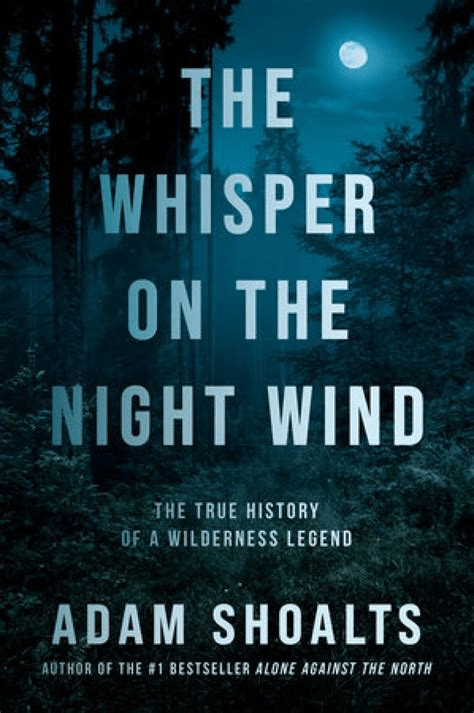
The author is a wilderness writer, and like many wilderness writers, he can write lyrically about the Canadian forests, giving you a sense of eerie beauty, and then he can turn around and be funny with the hardships that he and his hiking partner have to go through. In this book, he’s on the hunt for “the Traverspine demon,” a mysterious creature that, according to historical records, terrorized a remote outpost in Labrador. It sounds like a Sasquatch (which Shoalts, oversimplifying merrily, says is only attested in the Pacific region), but it leaves cloven footprints.
Shoalts and his friend push on through conditions that would have made this Bigfoot buff turn back, such as days of impassable brush. They don’t find the creature, but they do find a theory. Shoalts, a materialist, decides it was probably a combination of sightings of a wolverine, and moose tracks (both animals were rare in the region at the time). His theory is pretty convincing. He undermines his case a bit by dismissing the Greek centaurs as people’s first sighting of a man on a horse, while ignoring all the other, harder-to-dismiss chimeras that populate Greek legend.
Jack Reacher, drifting through town as is his wont, stops to help out a random guy who’s being bullied, and once again ends up stopping an international plot basically single handedly. He then has a gratuitous affair (not graphically described) with a female character he will never meet again, before leaving town.
Also, Nazis. (Not very creative, guys. Do better.)
One thing I like about the Reacher books is that I’m never worried about him. No matter how outnumbered or apparently outgunned he is, I know Reacher is smarter, quicker, and has more martial arts and military skills than his opponents. But, at the same time, he consistently gets into situations where any sane person would be worried, and I know I should be scared for him. In that way, these books strike a good balance. I’m neither terrified nor bored.
Heartbreaking novel about an American ex-cop who has recently moved to rural Ireland. Super well-written. Very evocative of the landscape, the weather, and the people, including the way they use the English language. For example, they say things like, “He’s after leaving for work” instead of “He just left for work.”
Felix Francis has carried on the beloved institution of “racing thrillers” written by his jockey father, Dick Francis. All novels by Francis (pater and fils) take place in “the racing world.” Sometimes the main character is a jockey, sometimes a trainer or an owner, and sometimes the connection to racing is looser. All are written in the first person.
In this novel, the main character, Chester, very profitably runs a “syndicate.” He buys racehorses and sells shares of them to wealthy people who want to participate in the lifestyle. So each horse has multiple owners, but Chester is the main owner, and the one who liases with the trainers and jockeys to plan out the horses’ careers. Chester is less of a tough-guy character than the typical Francis protagonist. He’s also older and more established than Franics main characters usually are. His children are grown (just), and his wife is aging and losing interest in their marriage.
Syndicate had less action than previous Francis books I’ve read, and considerably less violence (though Francis books do vary a lot in this regard). It is not as tense as the cover makes it appear. I also wasn’t too impressed with some of Chester’s choices. All in all, this wasn’t the strongest Francis novel I’ve read, though it was on-brand. Three stars.
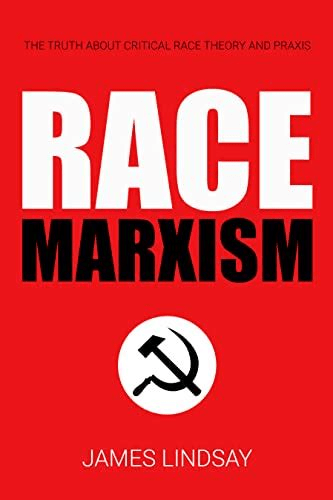
An indispensable reference book. Neither easy nor fun to read. I’ll be reviewing this in greater detail later.
It’s an older Asian couple taking each other’s picture in front of a teepee, in Yellowstone.
I also saw a Pakistani family doing the same thing, which was also super cute.
I can’t remember who it was, but one commentator I listen to pointed out, in response to the move to take American Indians out of team names and products, that American Indians are famous all over the world.
Anyway, I’m here at Yellowstone with the fam and it’s very international here. Languages I heard in the space of a few hours:
Hindi (? – pretty sure)
German
Mandarin
Korean
Spanish
British English
They all came to see Old Faithful, the geyser. Even more faithful than old faithful were the people. We all came at the time it was predicted to blow. We all sat quietly, as if at church, except that occasionally someone would say, “It’s starting! It’s starting!” – and it would be a false alarm.
When Old Faithful did demonstrate its power once again, we all raised our phones in unison, and faithfully recorded it.
The human kindness continued the next day at this lookout point (veiwing Grand Teton peak), reachable by tram from Teton Village. 10,450 feet in the air, we faithfully offered to take each other’s family photos in front of the panorama, exchanging phones and then giving them back.
Human beings can be faithful, and kind, for a couple of days while on vacation.
The One who made the mountains is faithful forever.
This was inspired by me leaving comments in a feverish state, and realizing that such a chart probably existed and I was in the wrong quadrant possibly. Characteristically, when I made the chart I forgot to put “fever” on it, but clearly “I have a fever” would go in the upper left quadrant, which is by far the fullest.
I hasten to point out that this is all in fun. Except for the dig at Karl Marx.
Hi, everyone. I still have a low fever plus the muzzy head and joint aches that go with it, so this post should be … interesting.
Within the last week I finished the book above. If the Shoe Fits is a sort of very loose Cinderella re-telling. The heroine’s name is Cindy. She has a stepmother and stepsisters. They are not hostile to her as in the original story — they are actually quite affectionate — but they are gorgeous, thin Hollywood babes, very much in the T.V. world, and Cindy is plus-sized, so there are some hints that things were a bit rough in high school. The handsome prince is the heir to a fashion empire. Cindy has just graduated from fashion school, with a special interest in shoe design. As you can see on the cover, the author does manage to get her into an outfit that parallel’s Disney’s Cinderella. And yes, there are crystal-covered shoes at one point. (No, she does not lose them, though I was waiting for that.)
O.K., those are the similarities. Now, the differences. This book takes place in the fashion world and in the world of reality T.V. Cindy and Henry must get to know each other while they are both contestants on a show that is obviously The Bachelor (a show whose producer is actually Cindy’s stepmother). So, all of this is pretty different from a fairytale.
A Sensible Story of Chub
If the Shoe Fits was written by Julie Murphy, who is also the author of Dumplin’. I have not read Dumplin’ but I did see the movie. This book, I would say, has the same strengths and weaknesses as the ones I noticed in Dumplin’.
First, the strengths. Both books feature a romantic heroine who is fat. In both cases, the amount of self-pity that gal displays is very low. This is so refreshing. Plus-sized girls need role models who are not whiny and self-obsessed. Dumplin’ is in high school, so she has a few more issues with her weight than Cindy does, and it’s shown how this leads her to be unfair to her naturally thin best friend. Cindy notes that she has gotten catty comments and the like, and it’s hard to find a variety of clothes in her size, especially in the fashion world, but for the most part she’s confident and she displays no envy or hostility to the more Barbie-like women who are also contestants on the T.V. show. Finally, in both books there is an attractive male romantic interest who seems to really like Cindy or Dumplin’, and this is accepted as a matter of course. There’s no insulting discussion along the lines of, “I like you even though you’re fat because …” blah blah blah. Is this unrealistic? Maybe. But remember, this is a romance genre, so it’s a fantasy for women. Also, some guys are attracted to women who would consider themselves fat (correctly or incorrectly). Finally, whenever one person says to another, “I like you even though …,” I would say that’s a red flag. Unless it is Mr. Darcy speaking, it probably means the “even though”-er feels superior to their prospective romantic partner, and expects that they will be able to treat them badly.
The Less Sensible Part
So, those are the strengths of each book. The downside? Both books have a subtext that being fat is just like being gaaay.
In Dumplin’, the heroine has warm memories of “Dolly Parton parties” that she and her beloved aunt used to have. Later, she finds out that her aunt was longtime friends with a whole bunch of drag queens who are also huge fans of Dolly. The drag queens, and their theatre, are a safe space for Dumplin’ and they help her prepare for the beauty pageant. So, a major theme of Dumplin’ seems to be that drag queens are kind, safe people who make great mentors. We have found this not to be true.
In If the Shoe Fits, we have Jay.
“Jay?” Henry calls.
A beautiful person with short, perfectly edged lavender hair, a manicured beard to match, razor-sharp eyeliner, and nude lipstick rounds the corner. Jay wears a flirty skirt with a cropped sweater topped with a trench coat and platform sneakers.
“This is Jay,” says Henry.
“Follow me,” says Jay as Henry helps them down from the stage.
So, Jay is a basically a very lost and confused young man whom the author insists on calling they throughout the entire book.
I realize that what I’m about to point out is well-trodden ground, but I’m going to tread it again.
How do I know Jay is a young man? He has a beard, and he’s “beautiful.” If Jay were a young woman who had been taking testosterone, he would be overweight, balding, with acne, and the beard would be scraggly. So, my instinct is that Jay is a young man. I pictured him that way as soon as the character was introduced, and I continued to think of him as “he” throughout the book.
As a mom, I really feel for Jay. I’d like to just give him a hug and a cup of tea, and introduce him to some genuinely good father figures so he can see there’s nothing wrong with being a man. Jay needs Jesus. And yes, I realize all the real-life Jays out there would howl with indignation if they were to come to this blog and see me say that. They can only interpret “You need Jesus” as a condescending slam, not a genuine expression of love and concern. People have been reacting that way to the name and message of Jesus for 2000 years. I don’t know who needs to hear this, but just because that is your reaction right now, doesn’t mean it has to be that way forever.
Second well-trodden point: go back to the quote above and look at Jay’s outfit. A flirty skirt with a cropped sweater – already sad on a man – but the trench coat and the sneakers take the outfit to a whole new level. That level is chaos. Jay has selected for himself an outfit that screams, “I have no idea what’s going on or what or who I want to be, and I want you to admire this chaos and join me in it.” Yes, this book does take place in the fashion world, which is notoriously in love with the weird … but Cindy describes a number of her own outfits throughout the course of the book, and they all make sense. No matter how creative Cindy gets with her outfits, they are integrated, coordinated, works of art, because Cindy knows what she is: a woman.
Finally (the most well-trodden ground of all) despite the author’s best efforts, it doesn’t really work to use the pronoun they for a character we already know. (They in the singular is fine in English, when it’s referring to an unspecified or unknown individual. When we have already met a character, that person is no longer unspecified.) For example, at one point Jay leads a group of dignitaries into the boutique, and then a little later they hop down from the counter they were sitting on. (Were all the dignitaries sitting on the counter? Or just Jay?)
Just Gotta’ Do It Myself
As someone who wears plus sizes, has a belly, and has in the past been fat, I like the idea of these chubby-heroine books. This is especially true since the majority of women in the U.S. are what the fashion industry considers plus-sized. But sadly, I think I’m done with the genre. The last chubby-heroine book I read tied confidence in a plus sized woman to female empowerment, and female empowerment to abortion, with a side advertisement for “spouse-sharing.” The one before that, a murder mystery, was tame by comparison, but it did include a bunch of little digs at white girls. I’m done.
I guess I will just have to write a chubby heroine into my own books … oh, wait, I already have!
Magya is a short, curvy mother of four who stepped out of the shadows to grab her own romantic subplot in my book The Strange Land. She was pregnant when her husband was tragically killed. Another member of the tribe stepped in to care for Magya and her children, and he found himself falling in love with her as she went through pregnancy and grieving and the hardships of a Siberian winter. He spends the year sitting on his hands so as not to bother her, and by the next year, they are married.
Sari is also a mother of four and a larger lady, but her story, in the same book, is much more tragic.
Don’t go to my novels just for the chubby girls, of course. Go for the survival and the demons and the dinosaurs. But don’t be surprised if you encounter all kinds of women – and men – along the way. That’s what happens when we just write about life.
Why don’t you need the apostrophe-s? Because English has a category for showing possessives without it … and it’s a rather large category.
fairy dust
bear claws
tiger tracks
baby poo
chicken feathers
lettuce leaves
castle battlements
Lady Chapel
Loch Ness Monster
angel wings
devil horns
cow horns
deer antlers
child care
Jerusalem stone
Christian ethics
dandelion fluff
mustard seed
computer screen
… O.K., o.k., … maybe it’s only allowable when the person or entity possessing the thing is acting as an adjective describing what type of thing it is.
So, one Latin word for brother is germanus. (Sister = germana.) The others, of course, are frater and soror.
We get our derivative “germane” from this, but also “German.”
That’s right, the Romans looked at the Germanic tribes and just started calling them “the brothers.” I guess they must all have looked alike to them. And probably they were all actually related to each other.
Meanwhile, the Spanish Celts were speaking their adorable pidgin Latin, so we get the Spanish hermano/hermana.
There are fewer words in this world than it first appears, actually.









 Out of Babel Books