When Romance Goes Rong: A Review of Tyler Perry’s A Fall from Grace

Photo by Drigo Diniz on Pexels.com

A Fall from Grace is a movie that’s out right now on Netflix. This post will contain spoilers, though not for one particular twist. Which shows, by the way, how good of a movie it is, that I can tell you a good bit of the plot and still hold back a twist.

I had a feeling this drama was going to be good as soon as I saw Tyler Perry’s name on it. I haven’t seen all his Madea movies, and of those I have seen, I haven’t liked all of them equally well. But I loved Madea’s Witness Protection. It was obvious, watching it, that there is not just comedy here but some human wisdom as well. I don’t know whether Grace is Perry’s first drama, but it’s the first one I’ve noticed circulating. Something told me that after years of making movies, he would be maturing as a director and ready to make impactful dramas.

I wasn’t disappointed. Grace is a really good drama, in the sense that after watching it, I honestly feel as if I have personally been through Grace’s experience. As of this drafting, I watched it about 24 hours ago, and have been thinking about it more or less continually ever since.

The title character, Grace, is a lonely divorceé with a grown son. When the movie opens, we are told that she has killed “her husband,” and that this is really out of character as she is a Sunday School teacher who bakes cookies for the kids in the neighborhood, etc. But she has confessed to the murder. The young public defender who is assigned to Grace is expected to plea bargain, and it’s expected that this will be easy to do given Grace’s (up until now) stellar character. For different reasons, the public defender starts digging in to what really happened. And from those events flows the title of this post.

In a series of flashbacks, we see Grace fall in to an unexpected romance with a younger man. (It’s hard to tell his age exactly. I first thought he might be about 10 years younger that she is, but it later seems it’s closer to 20.) This man pursues her, and at first she is skeptical. She even asks him flat-out, “You have probably been with many attractive younger women. Why me?”

He answers very wisely, “We tend to do that to ourselves as people. We ask, ‘Why should this good thing happen to me?’ The real question is, Why not you?”

Over a three-month courtship he overcomes her defenses. They talk for hours. Even at this stage there are a few red flags. For example, on their very first date he tells her, “As you get older, you start to get interested in people who have a wise way of looking at the world. You are a woman who sees the world etc. etc.” But at this point he’s only known her for a few hours. He started pursuing her literally after only a few minutes of conversation. He has not had time to find out how she views the world. This is flattery. But it’s done so sincerely.

He also, with remarkable insight, says to her, “There’s this thing you do. You’re judging. Stop it.” Of course, she is judging. She is an upright older woman. She is always judging herself and others. This is how we live. Hence, this young man could probably say this to any older woman and be 100% correct. But at the time, it seems like a sensitive perception. Later it becomes obvious that he was trying to get her to turn off her faculties of judgment for reasons of his own.

After an incredibly romantic proposal scene, Grace marries this man. She’s never been happier. She never felt this loved and understood, even with her first husband who later left her for his secretary.

Then, within a few months of getting married, she finds out that her new husband has: taken out a huge new mortgage on her house (which was previously paid for) … stolen her passwords, forged her signature, and embezzled funds from the bank where she works. She loses her job. The mortgage is unpaid, and she has no way to pay it. She is facing losing her house and possible jail time. She calls the police, but legally her house is now her husband’s and they can do nothing. It becomes obvious that the entire courtship and marriage were a scam.

Even then, she doesn’t kill him. She keeps trying legal ways to get him out of her house, but there are none. She is reduced to repeating emptily, “I want you to give me back my money.”

Finally comes the scene where Young Husband is justifying himself. This man who seemed so understanding and caring is sitting with his back to Grace, sprawled in a chair, saying casually, “Actually, the way I see it, you owe me that money for all the sex and all the joy I gave you. Women your age … you’re low-hanging fruit. In a way, if you think about it, all this is your own f—ing fault for making this so f—ing easy. For being weak.”

By this point in the movie, I already knew she was going to kill him and I was pretty sure this was the scene where it was going to happen. But I was confused. I didn’t see a gun anywhere in the house, and wasn’t sure Grace would even know how to use one.

Then I saw her walking up behind him with a baseball bat, and honestly, my impulse was to jump off the sofa and scream, “Do it! Do it!”

Once she does it, of course, her life is completely ruined. She is now a murderer.

Watching this, we are forced to ask ourselves … “In Grace’s position, would I fall for this?”

I can’t arrive at any answer other than Probably Yes.

Grace is about my age, give or take 10 years. I happen to be happily married. But what if I wasn’t? What if I had a job at a bank and a house that was paid for? It’s quite a blow to the pride to admit to yourself that these things are more appealing to a young man than your very soul. Not to mention your body, which after all was once considered attractive.

Grace isn’t stupid. She’s pretty savvy, actually. And she has been scarred by divorce. Yet she still falls for this extremely cruel scam. Primarily because he puts her in a position where, in order not to fall for it, she would have to decide she is basically worthless as a person.

So I guess you could call this movie a public service announcement.

The Wanderlust Tag

February is the month of romance, and the settings in this tag are as romantic as can be! I think this is most fun tag I’ve seen yet. I stole … er, got it from my faithful friend The Orangutan Librarian. She didn’t exactly tag me, but … she did say anyone can do the tag. So here goes!

Rules

  • Mention the creator of the tag and link back to original post [Alexandra @ Reading by Starlight]
  • Thank the blogger who tagged you
  • Answer the 10 questions below using any genre
  • Tag 5+ friends

The Questions

Secrets and lies: a book set in a sleepy small town … Many of Anne Tyler’s books are like this. Also, every almost every single Miss Marple mystery by Agatha Christie. Sometimes Miss Marple travels, and solves a mystery on a train, or in the Caribbean. But my favorites are the ones where she uses her knowledge of the character types, the dark dynamics, and the domestic history in a small town … her own small town, or someone else’s. As she always points out, small towns are not boring!

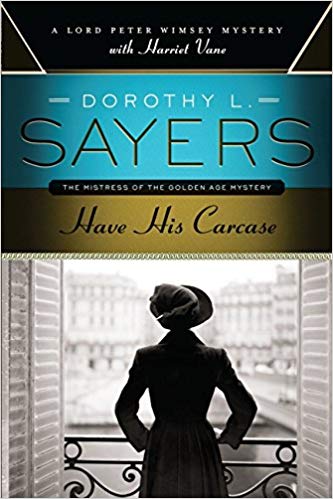
Salt and Sand: A book with a beach-side community … Have His Carcase by Dorothy Sayers. I’m not sure why the cover of this book looks the way it does, as the most striking scenes in it take place on a beach. This book stars Lord Peter Whimsey and his love interest, the tomboyish academic Harriet Vane, who is hiking along a deserted beach when she discovers the body of a man with his throat gruesomely slit. Harriet photographs the corpse, and after she leaves, the tide disposes of the evidence. Harriet herself becomes a suspect, and she and Lord Peter must put their heads together to extricate her.

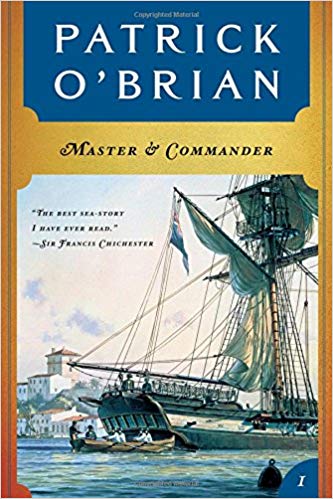
Here there be dragons: a book with a voyage on the high seas … I don’t read many sea stories. In fact, this is the only one I can think of besides Treasure Island and the third book of Ursula Le Guin’s Earthsea trilogy. Master & Commander is a really good book. When I was reading it, I even had dreams about it. They made it into a movie, which is also very good, but the movie only covers about half the material in the book, and not even the most sensational incidents.

Tread lightly: a book set down a murky river or jungle … There are many good missionary stories that take place in the remote jungle. These are novelized versions of real events. There is Bruchko (South America); Lords of the Earth (Irian Jaya); In Search of the Source, set in Papua New Guinea, by Neil Anderson; and Do You Know What You Are Doing, Lord?, which gives a very different perspective on the same events, written by Neil’s wife Carol. I am tempted to mention Through Gates of Splendor by Elisabeth Elliot, but I haven’t actually read it.

Frozen wastes: a book with a frostbitten atmosphere … Ursula Le Guin’s Left of Hand of Darkness takes place on a planet that has two huge ice caps which reach well down into what on Earth would be called the temperate zones. The main character, an ambassador for an interplanetary council, ends up in a gulag-like camp, is rescued by one of the locals, and the two make an amazing trek across one of the glaciers to escape.

The boonies: a book with rough or isolated terrain … I think many books depend on rough and isolated terrain for the danger and tension in their plot. Think of every murder mystery you’ve ever read where the group of suspects is cut off from the outside world by the tides or snows or whatever. This also goes for lifeboat stories, mountaineering stories, and post-apocalyptic books, all of which throw the characters on their own resources because “help is not going to come.” But I am going to mention Bearskin by James A. McLaughlin.

Hinterlands and cowboys: a book with a Western-esque setting … OK, you know what I am going to say here. I am going to, once again, recommend the Jim Chee and Joe Leaphorn police procedural/Navajo cultural mysteries by Tony Hillerman. What, you say you still haven’t started reading them? Get to it!

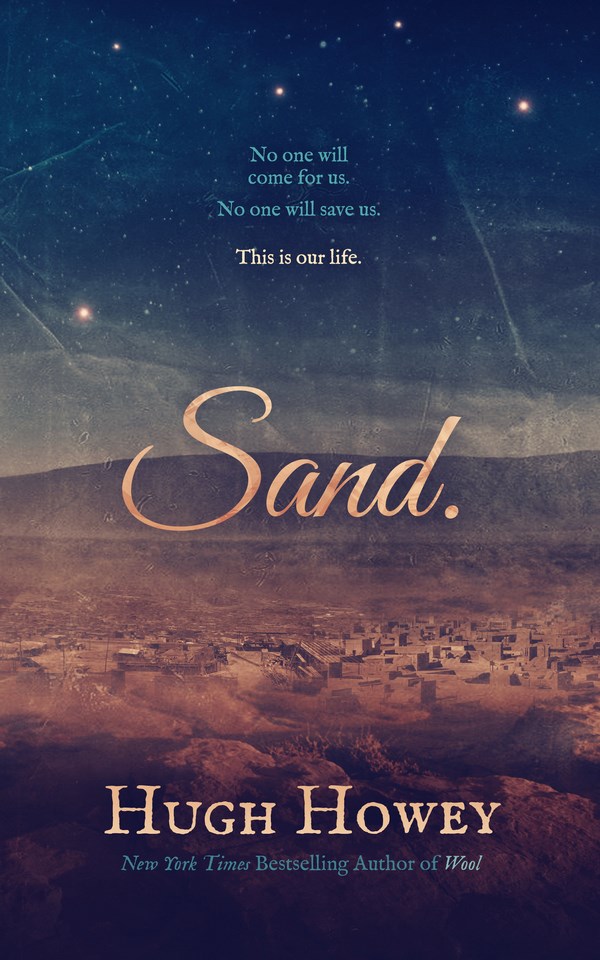
Look lively: a book set across sweeping desert sands … There are quite a few of these. I guess the desert really fires our imaginations. But I’m going to name one that I discovered recently: Sand. by Hugh Howey. (The period is apparently part of the title?) I know I’m late to the Hugh Howey party because the cover of Sand. tells me that he is the bestselling author of another book, Wool. It’s hard to imagine how anyone could make an entire novel centered on wool, but after reading Sand., I believe he certainly could and I’m going to pick up Wool as soon as I see it.

Wild and untamed: a book set in the heart of the woods … A Different Kingdom by Paul Kearney. Teenaged Michael lives on a prosperous farm in Ireland. When he ventures in to the woods near his home, he passes in to another, much larger, forest, which is also the source of all the myths and legends of the past.

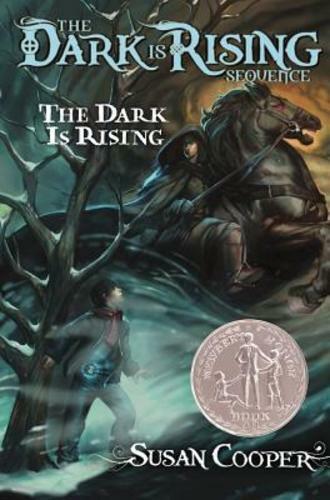
Wildest dreams: a whimsical book shrouded in magic … The Dark is Rising series. These YA books are pagan as all get-out, and seem to be based on a very good research into British and Welsh pagan lore. They do a great job of creating an atmosphere of this whole world of magic breaking in to a kid’s everyday life, in ways that only initiates can perceive.

… And may I mention that settings like these are the reason that I love reading and writing? It’s my ambition to write a book in each of these settings (except perhaps the high seas). I would say my books, to date, have covered Frostbitten, Boonies, Small Town and possibly Western.

And as usual, I tag … you, dear Reader! In the comments! Which of these settings do you love? Which will you never tire of?

Movie Trope Pet Peeves

Recently, novelist and screenwriter Andrew Klavan got himself into some trouble. He was reviewing Netflix’s The Witcher, and he commented that he dislikes movies that show a woman who is able to go toe to toe with men in a medieval sword brawl, without the help of magic. It’s unrealistic, he says. Might as well have made that character a man.

Well. Many people did not like this. Some challenged Klavan to a sword fight (he’s almost 70 years old). He even got at least one actual death threat.

Let’s see if I can also get myself cancelled. Here is a list of some of my movie pet peeves. And because there are exceptions to everything, I will also list exceptions.

  • Two women in an extended, knock-down, drag-out fight. This just feels icky and porn-y. Exceptions: the brief catfight scene in Sense and Sensibility, and Mrs. Weasley taking out Bellatrix LeStrange. Note that neither of these exceptions is actually a brawl.
  • A woman in an extended brawl with a man. I don’t care which one of them is the villain. This can only go one of two ways: either the woman unrealistically wins, or we get to watch a man beat up a woman (yay!). Exception: Antonio Banderas and Katherine Zeta-Jones’s sword duel in the stables in Zorro. Again, not really a brawl.
  • When the chase scene or fight scene completely smashes a room or building full of breakable, priceless artifacts. I realize it would be unrealistic to have a chase scene in such a setting and have nothing get broken, but it often seems as if directors delight in destruction. They’re smashing our culture with their philosophy, and in scenes like this they’re symbolically smashing our culture, represented by art or cakes or whatever, just because they can. Exception: Jackie Chan makes amazing use of props in his chase and fight scenes.
  • When someone is trying to maintain some kind of deception for the duration of the entire movie. I’m not talking about spy movies where you don’t know who’s who and that’s the point. I mean usually comedies where the high jinks flow from the MC trying to hide something from his wife, or from his daughter, or from her parents, or from an entire town. This just stresses me out. Exception: Breaking Bad, where the point of the series is to show a good man’s moral disintegration.
  • Now, a pet peeve of everyone around me: the fact that I can’t watch a movie without having to analyze the damn thing!
This is how a woman fights evil

What are your movie pet peeves? Do you hate any of the same things I hate? Share in the comments below.

The Seven Heavenly Virtues Tag

The Orangutan Librarian tagged me for this post that applies the “Seven Heavenly Virtues” to the world of our reading.

By the way. The Seven Deadly Sins are easy to remember, in groups of two, three, and two. There’s The World (Envy, Greed); The Flesh (Lust, Gluttony, Sloth); and The Devil (Anger … and the granddaddy, Pride). The seven virtues are the flip side of these.

Once when I was at university, the theme of our homecoming week was the extremely creative “We’ve Got Pride.” I will always love my fellow English majors who named their contribution to the parade “Beyond pride: the seven deadly sins.” They wanted to show that “[our university] also gots Envy, Greed, Lust, Gluttony, Sloth, and Anger.” And of course it was true.

Onward.

CHASTITY: Which author/book/series you wish you had never read?

Hmm. It’s rare that I go on wishing I had never read a book. Usually if it stuns me with some horror, I hate it at the time, but as my mind assimilates the idea, I’m glad to have encountered it in a book so that I can grapple with that aspect of the world.

A good example is Ken Follett’s Pillars of the Earth. A major part of the plot is a sexual assault. It’s described graphically. The creepy lead-up and the lengthy aftermath include scenes from the point of view of both the victim and rapist. When I read this, it was the first time I’d read a rape described in detail (or, at least, the first time I understood what I was reading). It was very traumatic, and it led to lots of crying and praying for women who were real-life victims. So, as you can see, it bore some good fruit almost immediately.

Later I read another book by Ken Follett in a completely different genre, and it also featured a serial stalker and rapist, with many scenes written from his point of view. At that point I decided that I would not read any more books by Ken Follett, nor would I ever get on an elevator with the man.

TEMPERANCE: Which book/series did you find so good, that you didn’t want to read it all at once, and you read it in doses just to make the pleasure last longer?

I don’t usually show temperance when it comes to serious, emotional reads. … OK, I actually don’t have much temperance at all. I once stayed up all night finishing Mary Doria Russell’s The Sparrow.

However, with comic series, I find that if you binge on them they can become wearing, whereas if you read one every once in a while, they are refreshing. For example, P.G. Wodehouse’e Bertie Wooster books and Janet Evanovich’s Stephanie Plum series.

CHARITY: Which book/series/author do you tirelessly push to others, telling them about it or even giving away spare copies bought for that reason?

Well this question will contain no surprises to anyone who knows me or has followed my blog for any length of time.

The Emberverse series by S.M Stirling: I recommend this often because it encompasses a wide range of interests. The first few books are post-apocalyptic, and then it becomes more of a fantasy series. I’ve recommended it to people because it’s set in the Northwest (Idaho, eastern Washington and Oregon, northern California). Recently I recommended it to someone who is interested in retro martial arts such as sword fighting and archery, because there is a ton of that in these books, including descriptions of how the weapons are made and gripping battle scenes. The research on these books is both wide and deep, from ecology to botany to anthropology to martial arts to Celtic mythology.

‘Til We Have Faces: A searing, emotional novel about friendship, identity, divided loyalty, and religion. One of C.S. Lewis’s less famous works.

The Everlasting Man (non-fiction): G.K. Chesterton discusses paganism and why it expresses important things about being human … with the cheery paradoxes that only he can bring.

The Divine Conspiracy(non-fiction): With wit and wisdom, Dallas Willard applies the Gospels in a fresh way (which we all need frequently). This is so well-written that it’s a pleasure to read, and you just sail through it even though it’s quite thick.

Now, go forth and read these!

DILIGENCE: Which series/author you follow no matter what happens and how long you have to wait?

Agatha Christie. She has such a large corpus of work that even though I think I’ve read all her novels, I’m never sure.

Also, the Brother Cadfael series by Ellis Peters.

Also anything by Tony Hillerman or Dick Francis.

It looks like formula mysteries are my genre for this.

PATIENCE: Is there an author/book/series you’ve read that improved with time the most, starting out unpromising, but ultimately proving rewarding?

Watership Down. It is gripping from the first, don’t get me wrong, but it is so long. Then when you get to the end, you discover that the author is doing things with it that only a really long book can do.

KINDNESS: Which fictitious character would you consider your role-model in the hassle of everyday life?

Photo by Rene Asmussen on Pexels.com

Any strong, quiet, capable character who consistently takes care of others. Durnik in the Belgariad; Precious Ramotswe in The No. 1 Ladies series; Bardia in ‘Til We Have Faces; Sam Gamgee, Aragorn, Gandalf, Aslan. And, of course, Zillah from my own books.

Unfortunately my gifts and personality are almost opposite from all these characters. But I’ve always wanted to be strong, quiet, calm, and capable.

HUMILITY: Which book/series/author do you find most under-rated?

This is a hard one to answer because I don’t always have a real great idea of what other people are reading. How can I know that the gem I’ve “discovered” hasn’t also been discovered by a bunch of others?

Apparently Thomas Sowell has a bunch of great books about economics and society that have helped the people who’ve read them greatly … but I have not read them, only watched videos of him speaking. There are many such examples.

Now, Discuss

I hesitate to tag people because it seems to freak them out. But if you get inspired by any of the questions in this tag, please answer them either at your own blog or in the comments.

Here’s Another Book Family I’d Like to Spend Christmas With

When I was a kid, our family had this book:

It had three stories in it. The Three Billy Goats Gruff (which everyone has heard before), The Stone Cheese (less well-known but still a fairy tale with familiar tropes), and The Trolls and the Pussycat.

A hunter is bringing a polar bear to the king of Denmark for a Christmas present. He gets caught in a blizzard and stops at an isolated farmhouse. But when the door opens, he finds the farmer and his family just getting ready to leave.

“Ah! You would not want to stay in this house,” said the farmer. “Every Christmas Eve a pack of trolls come down from the mountain to plague us. They eat our food, they sleep in our beds. We are lucky if they don’t break all our dishes and tables and chairs in the bargain.”

The hunter suggests that he and his bear might be a deterrent to the trolls, and he is right. The trolls surround the house …

Then one of them decides to poke the bear, which he thinks is a “pussy cat” …

With predictable results.

“And from that day forward no more trolls came to eat dinner at the farmhouse, for the news about Farmer Neils and his enormous pussycat soon spread far and wide in troll land.”

Re-Parenting in Fiction

“It takes a village to raise a child.” 

When Hillary Clinton says this, it means your children actually belong to the State, and the State has a right to intervene if they don’t think you’re doing it right (which, trust me, you’re not).  When normal people say it, it means only that in order to grow into healthy, functional adults, kids need more than just a mom and a dad.  They need a whole community around them.

In the past, I’ve blogged about how living in a small, isolated community consisting mostly of extended family limits the options when a family must deal with abuse.   That is still true.  But it’s also true that living in a close-knit community can provide some benefits for children whose own parents are lacking in some way.  They can receive re-parenting, or supplemental parenting, from aunts, uncles, grandparents, older cousins, and others.

Re-parenting in Harry Potter

Re-parenting occurs in Harry Potter.  Harry, as we all know, does not have a proper family and lives as the unloved stepchild of his aunt and uncle.  When he meets his best friend, Ron Weasley, he is introduced to Ron’s family.

From Ron’s point of view, the Weasley family is not all that great a place to be.  It’s a large family, Ron is the youngest of many brothers, and he often feels overlooked.  Also, the Weasleys are poor, not in the sense of starving but in the sense of wearing hand-me-downs and being subject to taunting from snobbier wizards.

From Harry’s point of view, Ron’s family is paradise.  It’s an intact family with a loving father and mother.  Mrs. Weasley is a great cook, and Harry’s wizarding gifts are accepted as a normal part of life instead of being hated, feared, and suppressed.  Even the large number of siblings makes the household a fun place to be.  Harry stays with Weasleys many times and eventually ends up marrying into their family.

Imperfect Parenting and Re-parenting

Over the course of the series, Dumbledore, the headmaster of Hogwarts, also provides a father figure to Harry.  However, it takes Harry some time to realize that this is happening because he has been conditioned to mistrust authority figures. 

Harry is also re-parented by his father’s childhood friend Sirius Black.  This brings out the point that all of us need re-parenting from a variety of people, not just one person or one family.  Neither Dumbledore nor Black is perfect (Mr. Weasley might be perfect though!), but between the three of them they give Harry a decent composite father figure.  That’s why we say “it takes a village,” not “it takes one perfect person other than your parents.”   

Ironically, sometimes someone who is a flawed parent themselves can be an ideal supplemental parent.  This is true of Dumbledore, who is a wonderful mentor to Harry even though he let his own family down in significant ways.  We also see it in how Ron experiences his family as a place of being second-best, whereas Harry has a great experience in the same family.  In some ways it’s easier to be a good parent to your child’s friends than to your own child. Thus, the need for re-parenting is not necessarily proof that our own parents failed us completely or were more than usually flawed. It takes a village is an expression that, properly understood, simply takes into account the fact that everyone is badly flawed. It’s like the interpersonal version of the need for checks and balances in government.

Re-parenting in Voyage of the Dawn Treader

In C.S. Lewis’s classic sea story, Eustace Clarence Scrubb has parents who are neither neglectful nor directly abusive, but they have raised him with an inadequate set of values that is rapidly forming him into a sluggard, a coward, and a snob.  Eustace, when he is whisked into Narnia, is re-parented not by any one adult per se but by the total experience of being in Narnia.  And ultimately, of course, by Aslan Himself. 

In Eustace’s case, getting re-parented is painful.  At every turn, he is asked to work harder, put up with more hardship, and complain less than ever in his life before. Then things get really intense when he turns into a dragon and, to cure him, Aslan literally rips away his dragon skin.  Eustace’s experience shows that re-parenting is not just about lots of love, hugs, and healing emotional wounds (though of course it can include that).  It’s also a process of re-training, being challenged and held to higher standards.  We see this in Dumbledore’s relationship with Harry in the later Harry Potter books, where Dumbledore starts giving Harry difficult assignments and holding him accountable whenever he doesn’t get on them.

Re-parenting in The Strange Land

Ikash, the teenaged protagonist of my novel The Strange Land, has an abusive father and a mother who because of her circumstances is barely functional.   Early in the book, before Ikash ever notices his crush, he “falls in love” with her parents, who have an imperfect but warm and loving home.  They demonstrate to him that there is another way to have a marriage besides the one his mother and father have.  It takes a village.

His crush’s father doesn’t immediately accept Ikash, seeing him for the at-risk teen that he is and a potential danger to his daughters.  Ikash is re-trained and challenged when he sees that Hur does not trust him, and is motivated to become worthy of that trust.  The relationship grows through a series of tragedies and setbacks, and by the end of the book, the way those two re-parent him is really a sight to see.

Ikash also finds father figures in his paternal uncle and in his older cousin Ki-Ki.  In both cases, it takes him some time to trust them because of his previous bad experiences with authority.  I didn’t consciously copy this dynamic from Harry Potter.  It’s just a natural dynamic that often repeats itself because of human psychology being what it is.

“Found Families” versus Re-parenting

Once or twice while reading book blogs, I have seen the term “found families.”  I take this to mean stories where a character is orphaned or rejected for whatever reason and goes on to find or create a “family” for themselves from friends they meet along the way. 

Clearly this is related to what I’ve been saying about re-parenting.  I am not sure that it’s exactly the same thing because I don’t know the details of what people mean when they say a “found family.”  My sense is that found families might more often consist of peers, whereas when I say re-parenting I am thinking more of a character being brought under the wing of a mentor (or, ideally, a couple) who are older and wiser.  Also, re-parenting can happen without the characters really being considered a family, as in the case of Eustace.

In the comments, please tell me what you know about the term “found families” and also what you love and/or hate about found families and re-parenting in fiction.